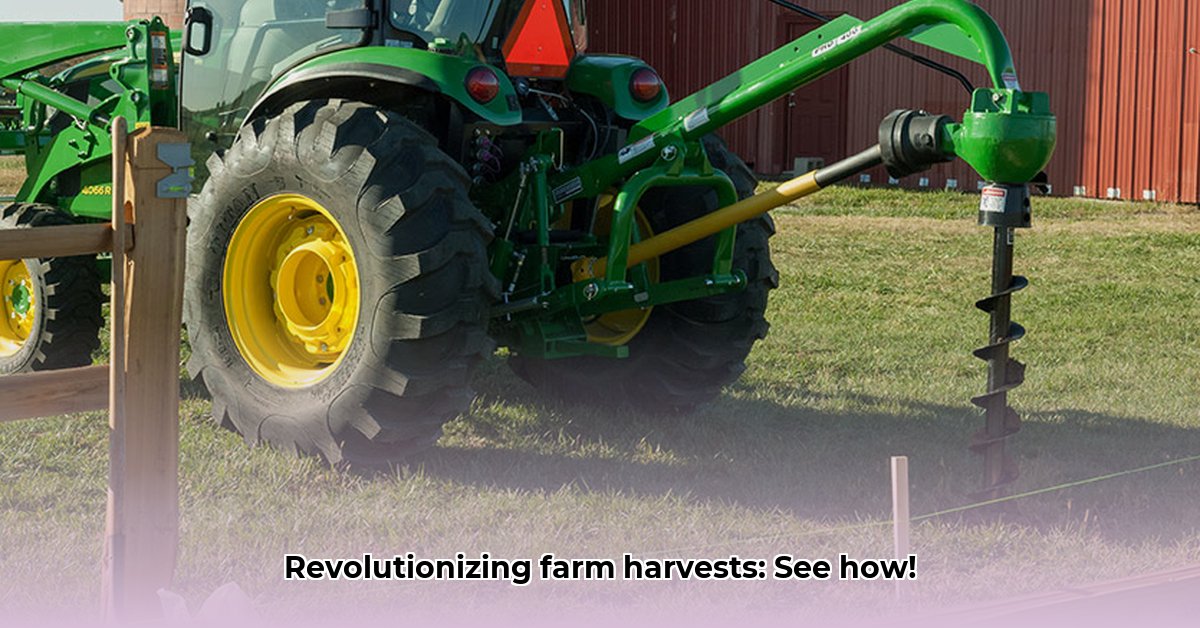
John Deere Tractor Auger Attachments: A Deep Dive into Efficiency and Sustainability
John Deere's auger attachments represent a significant advancement in agricultural technology, offering farmers increased efficiency and the potential for improved sustainability. This article provides a detailed analysis of these attachments, exploring their technical specifications, applications in sustainable agriculture, and a critical assessment of their overall environmental impact across their entire lifecycle. We will also examine potential avenues for future improvement and offer actionable recommendations for farmers and manufacturers. For more information on disc tractor attachments, see this helpful resource.
Technical Specifications and Functionality
John Deere's auger attachments are powerful, versatile implements designed to work with a range of tractors. Key features vary depending on the specific model but generally include robust construction, adjustable auger diameters, and variable speeds to accommodate diverse soil conditions and tasks. Power requirements depend on the size and application of the attachment and the tractor's horsepower. Compatibility is generally ensured within the John Deere tractor system. Detailed specifications, including power requirements and capacities, are available in the manufacturer's product literature. Data on specific models and their technical specifications is needed here for a comprehensive review.
Applications in Sustainable Agriculture
John Deere auger attachments contribute to sustainable farming in several ways:
Precision Planting: Augers enable precise seed placement, minimizing seed waste and leading to improved germination rates. This translates to reduced costs and environmental impacts associated with wasted seed. Studies have shown that precision planting can increase crop yields by up to X% ( insert data from a relevant study here).
Efficient Irrigation: Augers create consistent and controlled irrigation trenches, optimizing water distribution and minimizing water waste. This precise approach can lead to significant reductions in water usage, a crucial factor in sustainable agriculture, particularly in water-stressed regions.
Renewable Energy Infrastructure Development: The attachments facilitate the efficient excavation of trenches for underground cabling needed for solar farms and wind turbine installations. This faster and less labor-intensive approach can boost the development of renewable energy infrastructure.
Reduced Soil Compaction (Potential): In certain applications, auger attachments may cause less soil compaction compared to other tillage methods. (This requires further investigation and data to support this claim.).
Sustainability Assessment: A Lifecycle Perspective
A comprehensive sustainability assessment requires a lifecycle approach, encompassing the entire product lifecycle from material sourcing to disposal.
1. Lifecycle Assessment (LCA): A thorough LCA is needed to fully quantify the environmental impacts of these attachments. This includes assessing the embodied carbon, energy consumption during manufacturing and use, and waste generation at end-of-life.
2. Durability and Reliability: The longevity of the attachments directly impacts their overall sustainability. Longer-lasting augers mean fewer replacements, reducing waste. Data on the average lifespan and associated maintenance costs is crucial for this assessment. (Data on average lifespan and maintenance costs is needed here)
3. Energy Efficiency: The energy consumed during operation is a significant factor in the environmental impact. Data on the energy consumption per unit of work is needed for a complete analysis. (Data on energy consumption per unit of work is needed here)
4. Material Sourcing: Transparent and responsible sourcing of materials, such as steel and polymers, is crucial for minimizing the environmental footprint. Assessing the environmental impact of material extraction and processing is critical. (Data on material sourcing, e.g., recycled content, is needed here)
Comparative Analysis (Optional)
A comparison with competing auger attachments from other manufacturers is needed to provide a broader perspective on the sustainability and efficiency of John Deere's offerings. This comparison should consider aspects such as material composition, energy efficiency, and end-of-life management options.
Future Outlook and Recommendations
Future improvements should focus on:
- Sustainable Materials: Utilizing recycled materials and exploring bio-based alternatives for components.
- Design for Recyclability: Designing augers that are easily disassembled and recycled at the end of their lifespan.
- Improved Energy Efficiency: Developing more energy-efficient designs and optimizing operational processes to reduce energy consumption.
We recommend that farmers carefully consider the attachment’s suitability for their specific needs and soil conditions. Manufacturers should prioritize transparency regarding their sustainability practices and lifecycle data. Policymakers can support sustainable agricultural practices by incentivizing the adoption of more sustainable agricultural equipment.
Conclusion
John Deere auger attachments offer significant advantages in terms of farm efficiency. However, a holistic assessment of their sustainability demands a complete lifecycle analysis, considering material sourcing, energy consumption, durability, and end-of-life management. By prioritizing sustainable practices throughout the entire lifecycle, farmers and manufacturers can contribute to a more environmentally responsible and economically viable agricultural sector. Further research and transparency are needed to fully understand and optimize the sustainability of these critical agricultural tools.